ACUP Presents CERL Methodology of the LOESS Project at the 2nd Citizen Science Congress of Catalonia
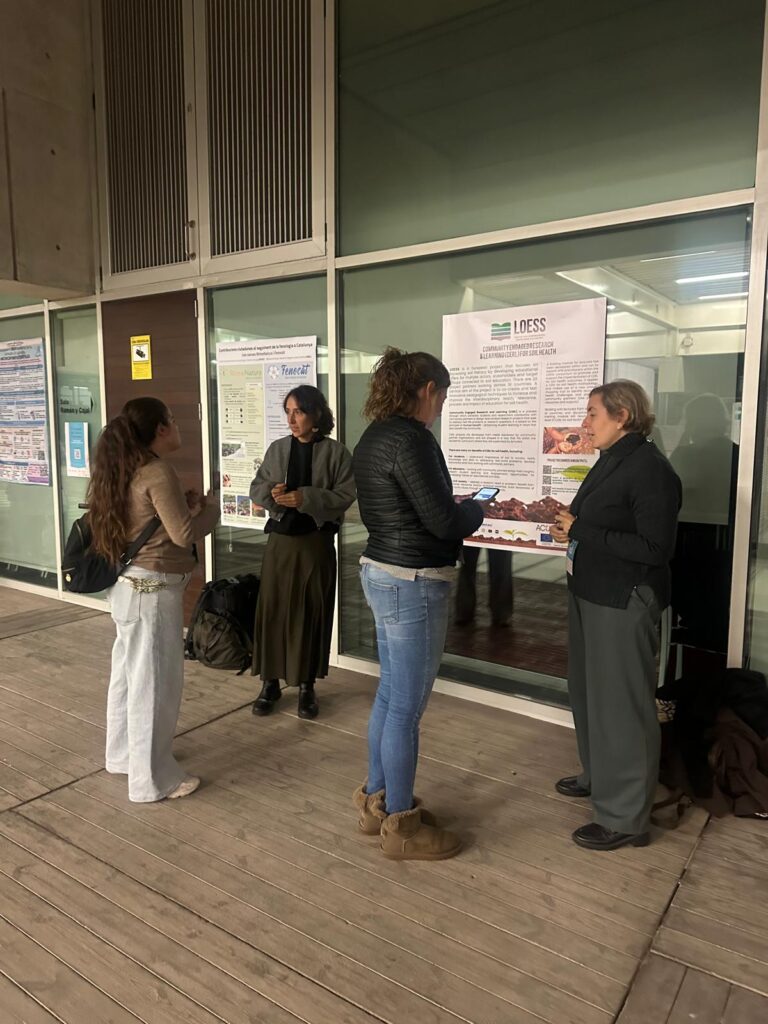
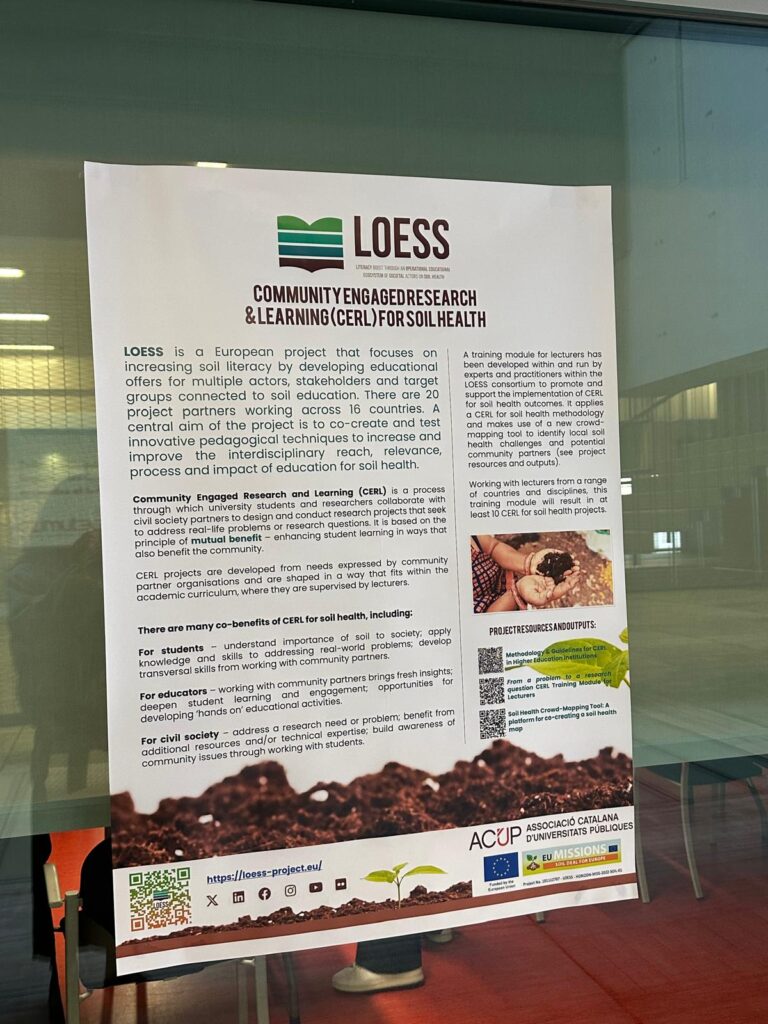
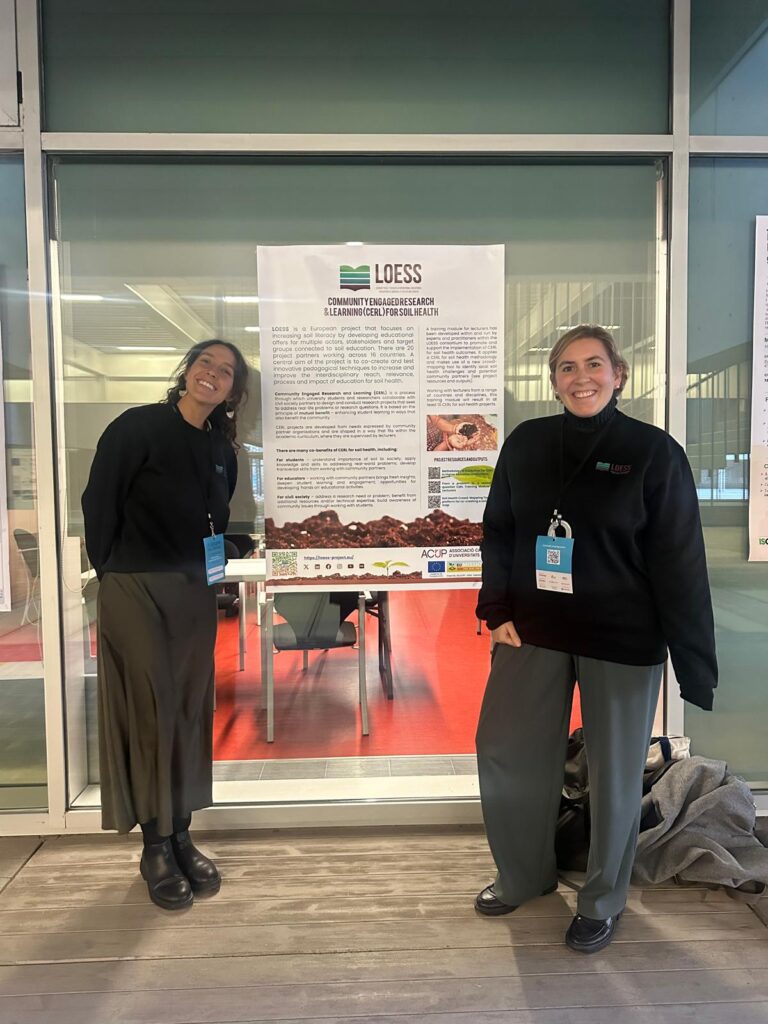
The Catalan Association of Public Universities (ACUP) presented a poster at the 2nd Citizen Science Congress of Catalonia on the CERL methodology for improving soil health education, designed by the partners of the LOESS project. The poster was presented by Núria Jové, Head of Projects, and Paula Santolalla, Communications Officer.
The congress, held on November 17 and 18, 2025 at the Barcelona Biomedical Research Park (PRBB), aimed to consolidate the movement, broaden its foundations, and explore new ways to harness the potential of citizen science to address global and local challenges of our time.
Specifically, the congress, organized by ISGlobal, Ideas for Change, and Science for Change, sought to:
- Promote multisectoral collaboration (science, education, technology, public administration, and civil society).
- Explore new tools and methodologies to improve citizen participation and social impact.
- Expand the reach of citizen science, engaging more communities and territories.
- Position Catalonia as an international reference in citizen science.
Community Engaged Research and Learning (CERL) is a process through which university students and researchers collaborate with civil society partners to design and conduct research projects that address real-life problems or research questions. It is based on the principle of mutual benefit – enhancing student learning in ways that also benefit the community. CERL projects are developed from needs expressed by community partner organisations and are shaped to fit within the academic curriculum, where they are supervised by lecturers.
A training module for lecturers has been developed and run by experts and practitioners within the LOESS consortium to promote and support the implementation of CERL for soil health outcomes. It applies a CERL for soil health methodology and makes use of a new crowd-mapping tool to identify local soil health challenges and potential community partners. Working with lecturers from a range of countries and disciplines, this training module will result in at least 10 CERL for soil health projects.