Case study: Escola Mas Rampinyo – primary school soil investigation project
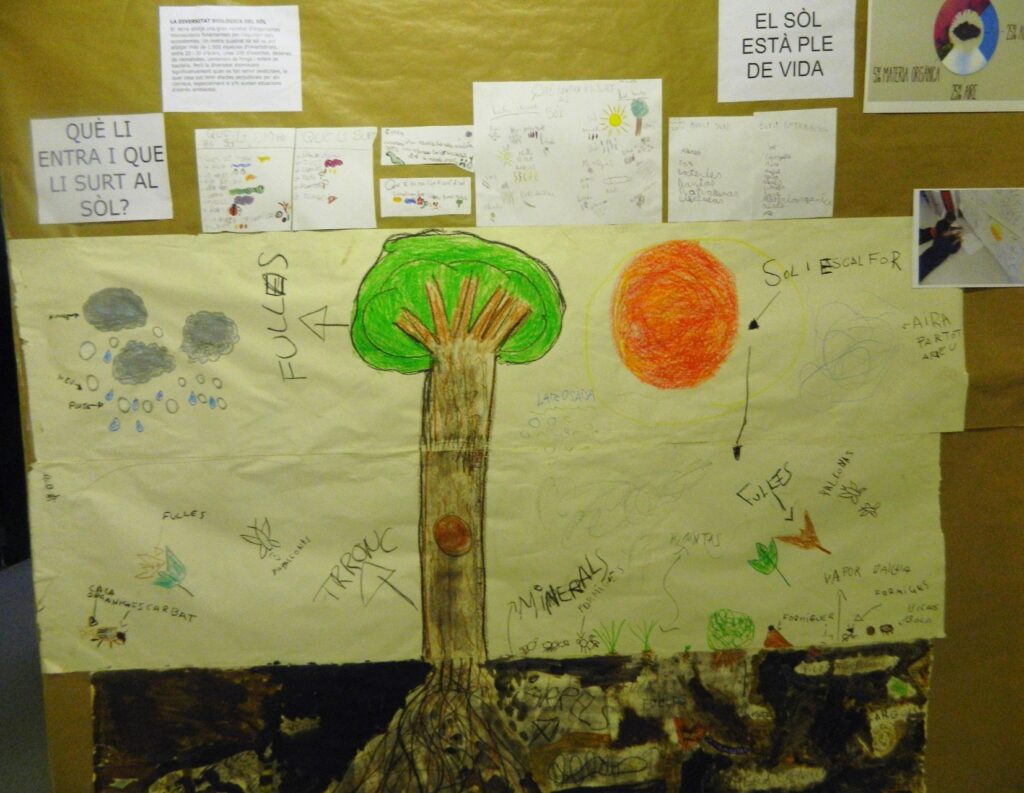
Photo acknowledgement: Escola Mas Rampinyo
- Primary
- Indoor
- Experiment, Hands-on activity
- Spain
Primary school soil investigation project
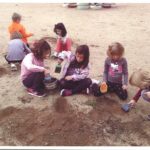
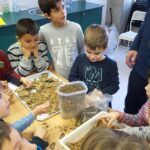
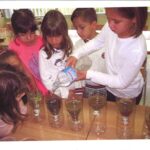
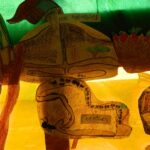
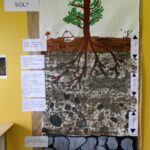
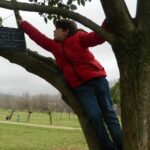
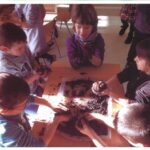
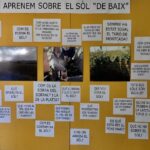
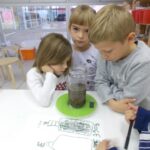
During the 2016-2017 academic year, Escola Mas Rampinyo, a primary school in Montcada i Reixac (Barcelona, Spain), undertook a school-wide project focused on the comprehensive study of soil across all educational levels. The project was called “Let’s investigate and learn about the soil below” (in Catalan: Investiguem i aprenem sobre el sòl de baix) The project aimed to foster pupils’ curiosity about soil, prompting them to pose relevant questions and propose solutions while acquiring new skills.
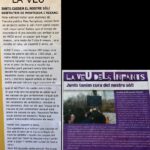
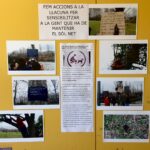
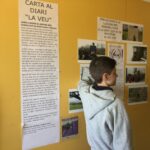
The initiative not only involved the school pupils and their teachers, but also families, experts in geology, and various community stakeholders such as urban gardeners, La Veu newspaper, and the ACER association.
Objective
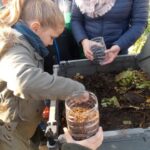
The overarching objective of the project was to familiarise the entire school community, primarily the pupils, with the soil—an essential component of our environment and planet. Specifically, the project aimed to introduce pupils to the components of soil and their interrelationships through practical activities, enabling them to recognise soil as a valuable resource at individual, local, and global levels.
Approach
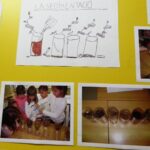
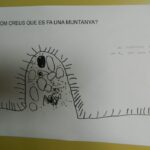
Structured around scientific inquiry, the project provided pupils with opportunities to pose questions within a real, local context and engage in interdisciplinary project-based learning. This approach facilitated the transformation of the pupil’s initial perceptions into scientific models, particularly those related to the geological system, living organisms, and matter.
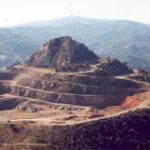
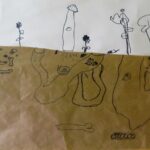
Examples of questions investigated by the pupils: Is the soil in our garden suitable for growing crops? Has the Turó de Montcada (a hill in the town that used to be a mine/quarry) always been the same? What causes soil pollution, and how can we prevent it from happening? What types of soil are best for making balls? What is it in the soil that makes plants grow?
Through this process, pupils not only formulated questions and devised methods to answer them but also engaged in imaginative thinking, reasoning, argumentation, and problem-solving. Despite the limited discussion of soil in primary and secondary school curricula in Spain, the project addressed the topic comprehensively across all school levels.
By focusing on research-based projects and school inquiry, the project not only enhanced students’ understanding of soil-related concepts but also promoted an understanding of scientific processes and their societal implications.