
Case study: Student Challenge “Make all soils healthy again!”
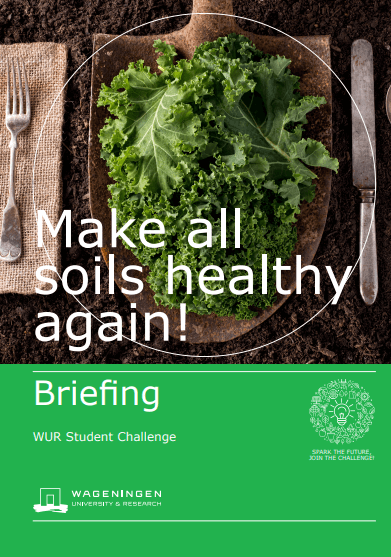
Photo acknowledgement:
- Tertiary/Higher Education
- Indoor
- Competition / challenge
- Netherlands
Student Challenge “Make all soils healthy again!”
In 2020, Wageningen University and Research (WUR) in the Netherlands hosted a Student Challenge to “Make all soils healthy again!” inviting all WUR students to submit proposals addressing three critical questions:
- How can soil health be effectively measured?
- How can land users and policymakers utilise soil health information?
- What are the most effective methods to communicate soil health to a wider audience?
Objective
The aim of this event was to actively involve university students and harness their innovative ideas in developing strategies for enhancing soil health. The challenge sought to generate concrete proposals and insights for the EU Mission Board, fostering collaboration among students, experts, and stakeholders to tackle the pressing issue of soil health.
Approach
The challenge focused on devising innovative approaches to restore soil health, concentrating on three main areas:
- Defining and quantifying soil health.
- Utilising soil health data to inform land management and policymaking.
- Communicating the significance of soil health to the public effectively.
Participation was open to all WUR students, who were encouraged to form interdisciplinary teams. Teams presented their ideas, which were evaluated by an advisory board comprising both public and private sector stakeholders. Evaluation criteria included innovation, feasibility, impact, and relevance to the EU Mission Board. Soil health was defined within the context of its capacity to support the UN Sustainable Development Goals (SDGs).
This case is unique in its engagement of students and their ideas to address specific soil health objectives. Key aspects include:
- Direct Contribution to the EU Mission Board: The challenge aimed to leverage students’ fresh perspectives to directly influence the EU’s research agenda, particularly through the EU Mission Board.
- Interdisciplinary Collaboration: Participants were encouraged to collaborate across various disciplines, fostering disruptive innovation.
- Learning and Societal Impact: The challenge provided students with a valuable learning experience, enabling them to develop projects with tangible, time-bound goals that directly address issues impacting citizens’ daily lives, with a focus on societal impact.