
Building resilience from the ground up: reflections from a roundtable on soil health and preparedness
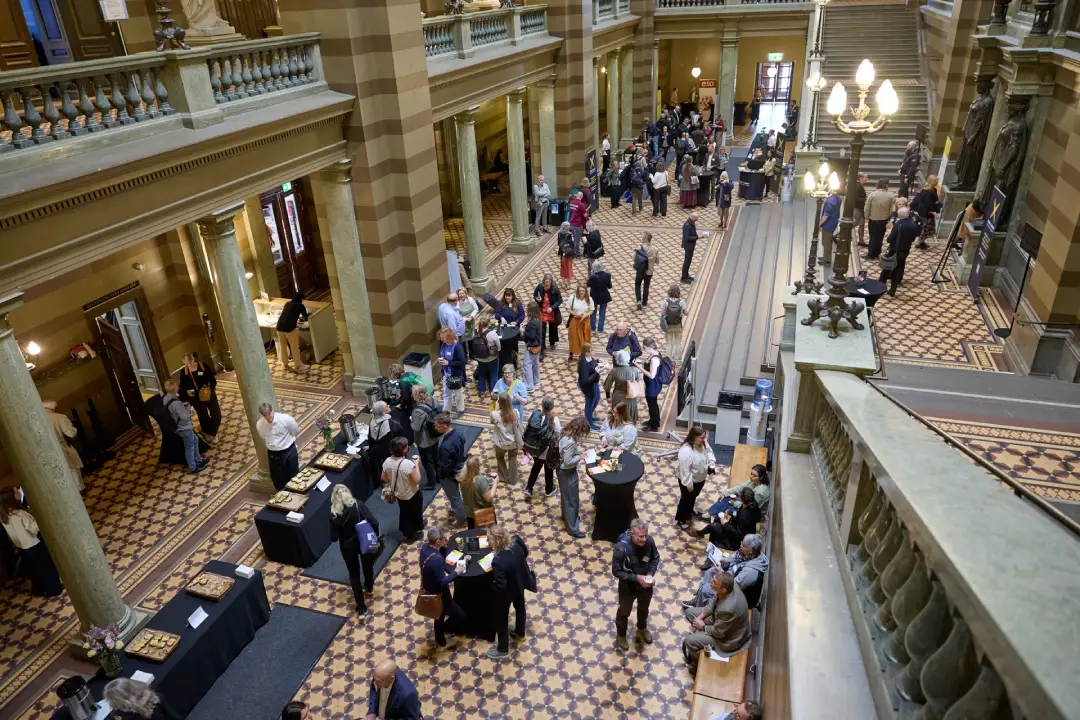
Around fifteen people took part in the discussion, representing different perspectives and highlighting the links between soil health and preparedness, as well as how these can strengthen one another and support the green transition. Participants included researchers, farmers, municipalities and regions, research funders, and other actors from the food and agricultural sectors.
Soil health as a foundation for the future
Several participants emphasised that soil health is a fundamental prerequisite for a long-term sustainable food system. Soil health is also closely connected to human health: good food must come from healthy soils. However, even though soil is agriculture’s most important production resource, this needs to be repeated more often in public debate, as fertile soils are often taken for granted.
One farmer described how soil health is central to the farm’s entire operation and how all decisions are based on creating better soils. At the same time, he stressed that it is difficult to navigate today’s agricultural system and that the consequences of different farming methods are often complex.
Knowledge, experience and research
A recurring theme was the need for knowledge sharing and exchange of experience. Many farmers already possess extensive experience-based knowledge about soil health, but better ways are needed to have this knowledge accepted as evidence-based knowledge. One example is so-called “farmer-led research”, where practitioners’ experiences and complex farming systems are given greater space.
Work on soil health is not only a matter for farmers; it requires a long-term approach and must involve the entire value chain. Several participants argued that the field is underfunded and that there is a lack of Swedish research on soil health and regenerative farming systems. As a result, Swedish farmers often have to seek knowledge internationally and try to adapt it themselves to Swedish conditions.
Norms and transition in agriculture
The discussion also addressed the norms that shape agriculture. In Sweden, for example, large parts of arable land are often left bare during the winter simply because “that is how it has always been done”, even though this has negative effects on soil health. To build resilient and productive soils that are better able to withstand crisis situations and reduce dependence on external inputs, living plants and photosynthesis are instead needed all year round. Integrating livestock and crop production is also important in order to create greater biological diversity and better soil health.
One participant explained that the transition often begins mentally among farmers. It is about starting to imagine how agriculture could function, rather than taking today’s system as the starting point. She also highlighted the need to change perceptions of what is considered “beautiful” or “proper” farming. Soil health is therefore closely linked to diversity – both biological diversity and diversity in ways of thinking.
Silos and language use
Several participants returned to the risk of creating new “silos” in work on soil health. People easily become defensive and isolated when they feel criticised, which makes it important to find language and working methods that include more perspectives. The choice of words affects who listens and becomes engaged, and soil health may have a greater impact if the issue is more clearly connected to preparedness.
Silos are also very much present within academia and between research fields, for example between agroecological and ecological research, which hampers knowledge development.
Preparedness and the food system
The discussion on preparedness centred on the need for long-term thinking. Today’s preparedness debate often focuses too much on the storage of grain and inputs, and too little on the long-term conditions required for a robust agricultural system. One example of more long-term work is the organisation Svensk Kolinlagring, which works to support the transition to farming systems that benefit biodiversity, carbon sequestration and improved water cycles. In this work, carbon sequestration is used as a lever for broader values, with biodiversity and resilience at the centre.
The public sector and the role of municipalities
One Swedish municipal representative described how the municipality works together with farmers on issues such as preparedness, water, ecological compensation and reduced phosphorus use. The municipality has initiated recurring meetings between different types of farmers and the municipality’s various operations in order to create better dialogue and cooperation. She emphasised that these relationships have taken time to build and that it is important that ideas that emerge are actually translated into action.
Another example mentioned was a pilot project in Kristianstad, where the municipality, together with other actors, finances concrete measures on farms. One lesson learned is the importance of process management and of municipalities receiving support to understand and work with issues such as carbon sequestration and soil health.
One municipality at the forefront of food preparedness is Södertälje, where the municipality has used innovative procurement to build long-term agreements around legume production and food preparedness. The focus is on securing capacity and robustness rather than the lowest price. This is a good example of how preparedness can be used as a lever to strengthen soil health while also reducing dependence on external inputs.
Funding and future needs
The discussion concluded with questions about funding and research. Several participants emphasised that soil health is a complex field in which it is difficult to produce simple and unambiguous research results. At the same time, there was strong consensus on the need to continue developing practical examples, building credible narratives, and creating long-term structures for research, advisory services and cooperation. According to one funder present, there are opportunities to apply for funding both for research and for the implementation of previous research results.