Soil Literacy and Education in Europe – Closing the Gap Between Policy Ambition and Educational Reality
Soil regulates our climate, supports biodiversity, and underpins the food systems that feed billions of people worldwide. Yet despite its critical importance, soil remains one of the most overlooked topics in European education. The LOESS project has set out to change that.
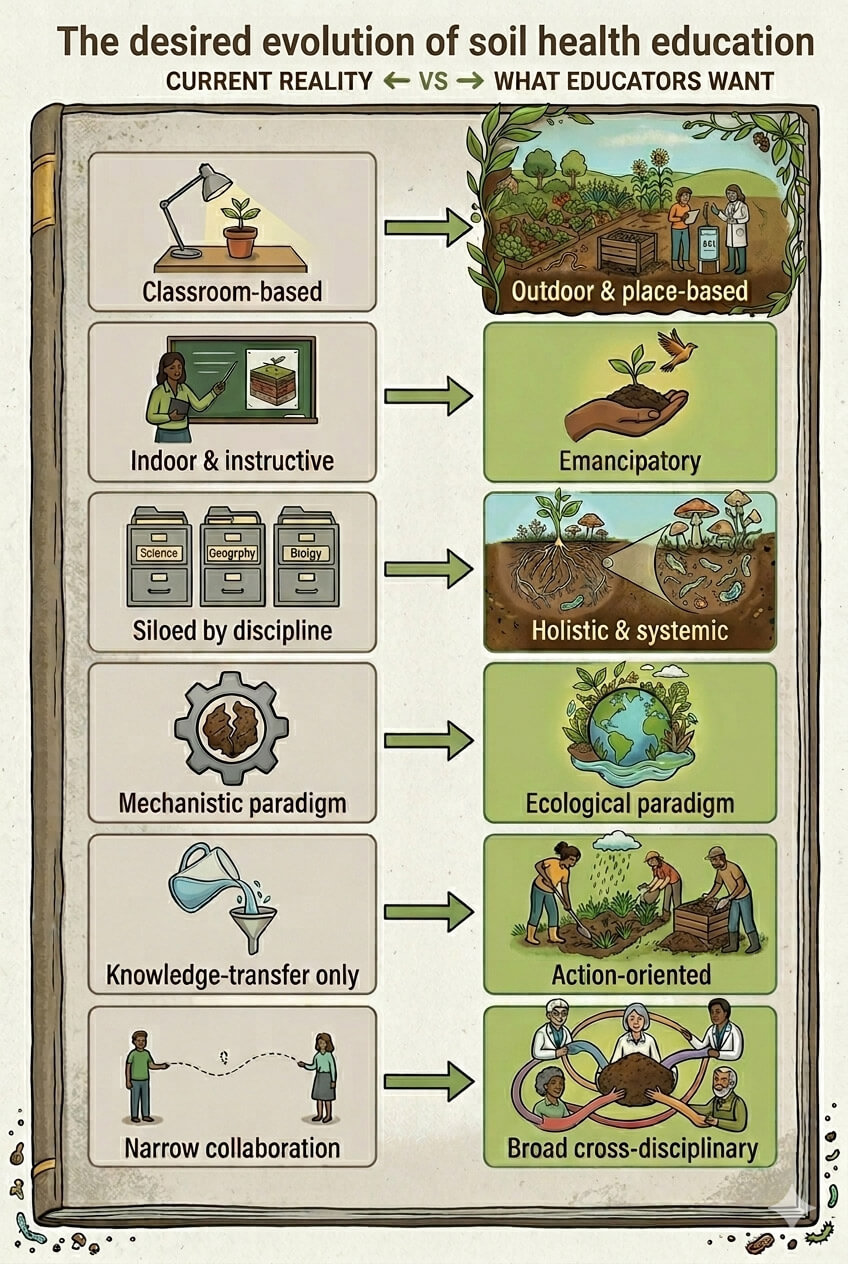
Through research spanning 15 European countries, LOESS has examined how soil health is currently taught across schools, universities, vocational training and public engagement programmes. The findings, published in Policy Brief 2, reveal a significant structural gap between Europe’s ambitious environmental policies and the reality inside classrooms. Soil content in curricula is largely confined to basic descriptions of composition and agricultural uses, teaching remains predominantly classroom-based, and educators report feeling underprepared and under-supported.
The Policy Brief identifies seven key areas for change: integrating soil health into curricula in a cross-disciplinary way; promoting experiential and outdoor learning; recognising soil as a systemic issue connected to climate, food and biodiversity; fostering collaboration between schools, researchers, farmers and communities; institutionalising teacher training; ensuring stable platforms for educational resources; and strengthening public awareness beyond formal education.
Recommendations are addressed to the European Commission, European agencies, and national ministries of education, agriculture and environment. Across all seven areas, one principle stands out: co-creation. Educators, farmers, researchers and local communities should be at the heart of how soil education is designed and sustained.
The EU has set bold targets for soil health by 2030. Meeting them will require not just policy ambition, but a society that understands the ground beneath its feet. That starts in the classroom — and it starts now.
THE CHALLENGE OF SOIL LITERACY IN EUROPE
Soil underpins carbon sequestration, water regulation, food production and biodiversity.