
What's new in the Loess project
Take a look at the new Policy Brief page
Take our survey
Watch our Stakeholders tools
Take Action
LOESS
Literacy boost through an Operational Educational Ecosystem of Societal actors on Soil health
LOESS
Literacy boost through an Operational Educational Ecosystem of Societal actors on Soil health
What's new in the Loess project
Take a look at the new Policy Brief page
Take our survey
Watch our Stakeholders tools
Take Action
Healthy Soils Matter
Healthy soils support over 25% of the world’s biodiversity and form the essential foundation of our food chains. However, soils worldwide are facing increasing stress, and the need to protect and restore soil health has never been more urgent.Impact of Healthy Soils on Everyone
Soils are crucial to our survival—they provide food, purify water, and sustain biodiversity and climate stability. Understanding these vital connections helps us see why soil health is not only important for farmers and scientists but for everyone. By increasing awareness and practical knowledge—referred to as “soil literacy”—we can all contribute to securing a healthy future for people and the planetThe Critical Role of Education in Soil Health
Protecting soil requires a fundamental shift in education. Currently, soil health is often overlooked or insufficiently represented in national curricula, with gaps between official guidelines and available teaching materials. By adapting educational systems to include comprehensive and engaging soil education, we can raise soil literacy and equip future generations with the knowledge and skills needed to safeguard this vital resource.The loess project
Started in 2024, the LOESS project focuses on creating innovative educational programs, continuous training, and skill development activities. It addresses diverse actors, stakeholders, and target groups connected to soil education, fostering deeper understanding and engagement.
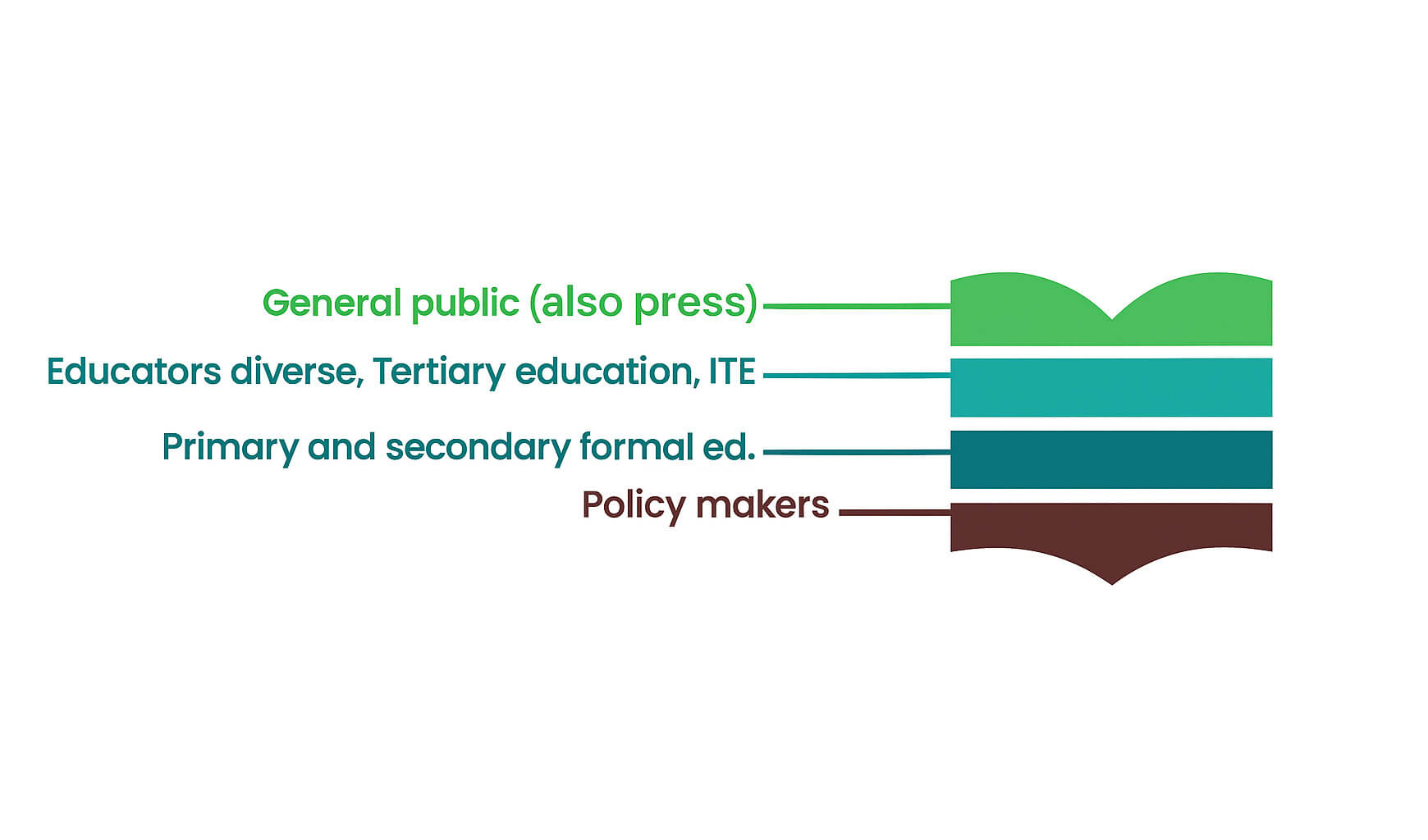
Take Action!
Identify yourself with an audience and get to know which educational tools and more can be helpful for you. Let’s take care of our soils, our lifes and the planet!
STAKEHOLDERS TOOLS
- General public
- Educators diverse
- Primary and secondary formal
- Policy makers
Anyone interested in the topic who is not a specialist — including citizens, parents, journalists, and media representatives.
- Glossary
- Crowd-mapping tool
- AR App
- Field experiments as demonstrators
Educators (Diverse)
Teachers and education professionals from different levels, subjects, and backgrounds — for example, primary school teachers, secondary school teachers, and special education staff.
Tertiary Education
Any education after secondary school, including universities, colleges, and vocational training programs.
ITE (Initial Teacher Education)
Programs that prepare future teachers before they begin teaching professionally — such as teacher training courses or university degrees in education.
- Blueprint for exemplary sustainable practices in education
- Case studies
- European Atas of soil education and training
- Course for Biology and Environment Education teacher students
- Online LOESS module for lecturers (CERL & Science Shop methodology)
- Module for students/ Sciencelearns.Soil + competence map
Primary Education
Formal schooling for children roughly ages 5–11 (early school years).
Secondary Education
Formal schooling for students roughly ages 12–18 (middle and high school years).
Formal Education
Organized learning that follows a recognized curriculum and leads to official certification (e.g., primary, secondary, and higher education).
People who design, influence, or implement public policies — such as government officials, ministry representatives, and education decision-makers.
Healthy Soils Matter
Healthy soils support over 25% of the world’s biodiversity and form the essential foundation of our food chains. However, soils worldwide are facing increasing stress, and the need to protect and restore soil health has never been more urgent.
Impact of Healthy Soils on Everyone
Soils are crucial to our survival—they provide food, purify water, and sustain biodiversity and climate stability. Understanding these vital connections helps us see why soil health is not only important for farmers and scientists but for everyone. By increasing awareness and practical knowledge—referred to as “soil literacy”—we can all contribute to securing a healthy future for people and the planet
The Critical Role of Education in Soil Health
Protecting soil requires a fundamental shift in education. Currently, soil health is often overlooked or insufficiently represented in national curricula, with gaps between official guidelines and available teaching materials. By adapting educational systems to include comprehensive and engaging soil education, we can raise soil literacy and equip future generations with the knowledge and skills needed to safeguard this vital resource.
About the LOESS Project
Started in 2024, the LOESS project focuses on creating innovative educational programs, continuous training, and skill development activities. It addresses diverse actors, stakeholders, and target groups connected to soil education, fostering deeper understanding and engagement.
Take Action!
Identify yourself with an audience and get to know which educational tools and more can be helpful for you. Let’s take care of our soils, our lifes and the planet!
LOESS RESOURCES - PRIMARY STAKEHOLDERS FOR OUR OUTPUTS
Anyone interested in the topic who is not a specialist — including citizens, parents, journalists, and media representatives.
Educators (Diverse)
Teachers and education professionals from different levels, subjects, and backgrounds — for example, primary school teachers, secondary school teachers, and special education staff.
Tertiary Education
Any education after secondary school, including universities, colleges, and vocational training programs.
ITE (Initial Teacher Education)
Programs that prepare future teachers before they begin teaching professionally — such as teacher training courses or university degrees in education.
Primary Education
Formal schooling for children roughly ages 5–11 (early school years).
Secondary Education
Formal schooling for students roughly ages 12–18 (middle and high school years).
Formal Education
Organized learning that follows a recognized curriculum and leads to official certification (e.g., primary, secondary, and higher education).
People who design, influence, or implement public policies — such as government officials, ministry representatives, and education decision-makers.